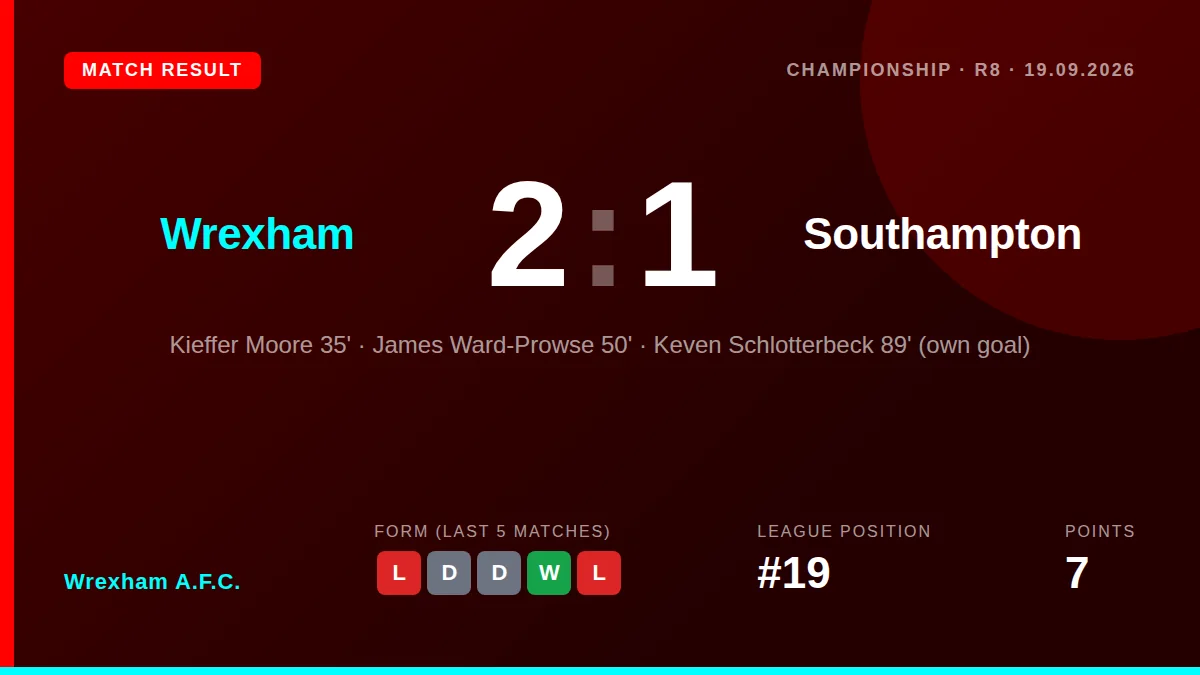

New historical findings have cast doubt on the celebrated story of Peter Baines, the 1930s Wrexham A.F.C. Forward long thought to be a pioneering Aboriginal Australian in English football. The research suggests Baines may not have been born in Australia or of Indigenous descent, reopening a chapter of the club's history just as the modern side sits 14th in the Championship with 10 points from eight games.
Baines scored 27 goals in 35 games for Wrexham in one wartime season during the 1930s and 1940s. He was later described in a 2003 book by Nick Harris as "the first Australian of Aboriginal descent in the League". A 1944 newspaper article also referred to him as an Australian. His story gained renewed interest following the club's 2021 takeover by Ryan Reynolds and Rob McElhenney, fitting into a narrative of Wrexham's diverse history.
Questions over his Australian heritage
Historian Bill Hern's recent investigation found no evidence Baines was born in Australia or was of Indigenous heritage. Hern located a Manchester birth record for a Cecil Peter Baines that matches the footballer's date of death. "I am 99% certain Peter Baines never set foot in Australia," Hern stated. His research could not substantiate claims that Baines was part of the Stolen Generations or that his father was black. References in old records, like a Habitual Criminals’ Register describing Baines as 'swarthy', were noted, but a description of his father's prison escape did not mention dark skin. No evidence was found that Baines's mother, Alice, was black either.
Supporters seek clarity on his origins
Trevor Thompson, who first encountered Baines's story over two decades ago, remains hopeful that clarity can be found. He expressed optimism about tracing family links and accessing unsealed church records to confirm an Australian connection. Historian John Maynard noted that a confirmed link would make Baines an important figure in Indigenous Australian sport history, as Aboriginal participation was later restricted by colour bars. This search for truth continues as the current Wrexham squad, which has conceded 12 goals in the final 15 minutes of matches this season, prepares for its next fixture, an away trip to face 22nd-placed Derby on 10 October.
Remembering Baines as a player and man
Regardless of the origins debate, Baines is fondly remembered as a talented and charismatic figure. His career included spells at Oldham, Crewe, and Hartlepool, and he even played and scored for Liverpool as a wartime guest. An article from 1944 highlighted him scoring three goals against Gateshead for Hartlepool. Newspaper clippings also documented court appearances and references to habits involving alcohol and gambling. After his death in Manchester in 1997 at age 77, an outpouring of affection followed. One letter remembered his "smiling face", while another described him as a "smashing story-teller and could laugh at himself". All who recalled him agreed he was a very good footballer.
The discussion about Baines's legacy emerges as Wrexham's modern era continues to build its own history. The team's recent form reads WLDDW, including a 2-1 victory over Southampton last Friday. Fans can track the progress of the senior squad, which includes sidelined players like L. Cacace and M. Cleworth, on the official squad page. Trevor Thompson's hope to finally trace family links and access church records to confirm Baines's Australian connection provides a poignant link between the club's past and its vibrant present.
First reported at The Guardian Football